
Doing publishing differently: a Q&A with Pellerin Books
I have a really fascinating interview for you today, with the founders of shiny new independent publisher, Pellerin Books! I have heard so many good things about Pellerin already and am very supportive of their determination to ‘do publishing differently’… and so I’m super excited to have pinned them down for a long chat to find out more about their plans.

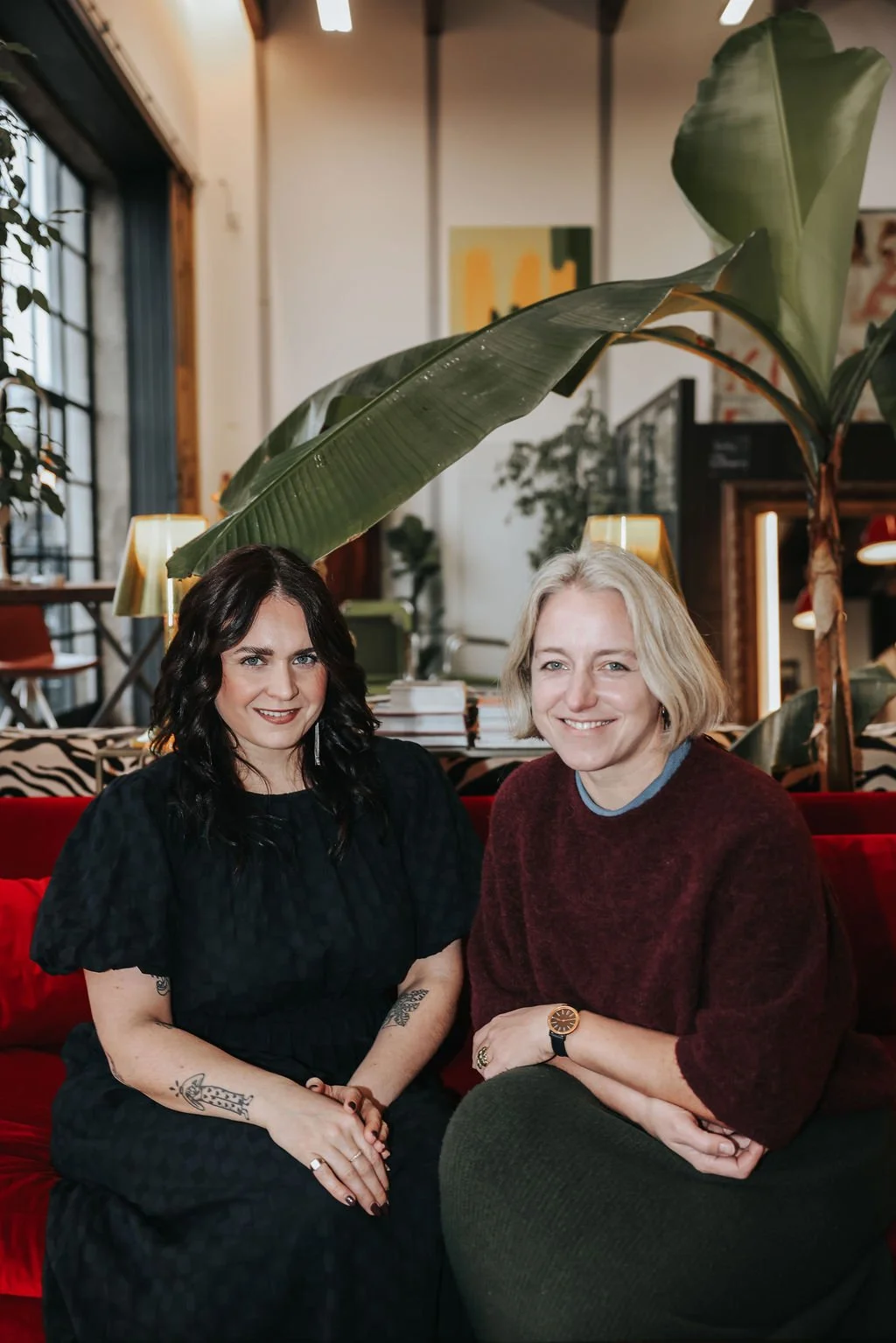
Jessie (left) and Laura (right)
Hi Laura and Jessie, thanks so much for being here! I’m excited to learn more about Pellerin and the model you are offering authors.
Please can you share a little bit about your backgrounds working for traditional houses, and what made you think ‘Actually, we think we could do this differently?’
LAURA: My co-founder Jessie Sullivan and I took different routes through our publishing careers. I came up through editorial, and Jessie through marketing and sales. I think that’s a big part of what makes Pellerin work, because we look at the question “what makes a good publisher” from opposite angles.
We first met at Head of Zeus six years ago, when I was the fiction publishing director and Jessie was the marketing director. We went for an aperol spritz in the pub and realised we were kindred spirits – we both love this industry, but find the same aspects of it old-fashioned or frustrating.
The biggest frustration for me was what happens after the debut. Publishers get very excited about debut novels, where anything is possible – but if that first book doesn’t succeed, they aren’t very good at keeping the faith and putting resource behind book two. As an editor, if you buy an author, it’s because you really believe in them – the way they write, the stories they tell, their characters. So it’s awful to see support dwindle if the first book doesn’t catch.
“As an editor, if you buy an author, it’s because you really believe in them – the way they write, the stories they tell, their characters”
JESSIE: For me, the biggest frustration was how marketing investment was decided. So often, budgets were driven by the size of an advance or how much had already committed to a book, rather than where the biggest commercial opportunities actually were. We have so much data available to help us understand readers, identify demand and work out where marketing investment is most likely to generate sales. Surely that should be our starting point?
I also found the 'feast or famine' approach incredibly frustrating. A handful of priority titles would receive large marketing budgets, while everyone else got relatively little. And if a book didn't immediately perform as hoped, its marketing budget was often the first thing to go – yet somehow we were still expected to grow its sales! It always felt completely counterintuitive to me.
Ultimately, I felt we needed to turn that thinking on its head: start with the readers, use the data to find the opportunities, and give every book a genuine chance to succeed, not just the chosen few.
LAURA: Both of us also thought it was crazy that authors find it so hard to access their own sales data. And this was a pain for us, too, because we’d usually be the ones trying to track down the figures across several different platforms or spreadsheets. We started talking about whether, if both of us wanted to change the same things, we could do it together. And that’s how the seed of Pellerin Books was planted.
Can you tell us more about Pellerin’s set-up and publishing model? What kind of books and/or authors are you looking for?
LAURA: There was never any doubt that we’d publish fiction. It’s what we both love to read, and it’s what we know how to publish. We publish popular fiction (aka ‘commercial’ or ‘genre’ fiction), which is essentially fiction for readers who already know what kind of book they are looking for: crime, thriller, romance, science fiction, fantasy.
We’re generally looking for authors who can write long-running series with characters or worlds we can return to again and again. If our authors aren’t writing series, they need a strong ‘reader promise’ instead, so readers know what their books stand for, and keep coming back for more.
JESSIE: We designed Pellerin from the reader upwards. That means thinking first about how readers actually discover, buy and read books, and building our publishing model around that. Ebooks and audiobooks are at the heart of what we do, reflecting how important both formats are to readers of popular fiction. But we publish all our books in paperback too, and if reader habits change, we'll change with them.
Like most digital-focus publishers, we don't pay advances. But what we do offer is a guaranteed marketing investment for every new title, written into our author contracts. It's our way of making sure that every book we acquire gets a genuine opportunity to find its readers. As far as we know, we're the only publisher to make that marketing commitment contractual.
You mention continuing to invest in books beyond the conventional three-month launch period. What does this look like in practice?
JESSIE: The biggest difference is that we don't see publication date as a deadline for marketing. A reader discovering a brilliant thriller today doesn't particularly care whether it was published last week or three years ago, so why should that determine whether we invest in finding them?
In practice, most of our marketing is digital: paid advertising on Amazon and Meta, promotions through reader newsletters and communities like BookBub, and working with our reviewer community to build awareness and reviews.
But the really important part is what happens next. Digital marketing gives us an enormous amount of information about what's working, who we're reaching and where there might be further opportunities. We can test different audiences, creative approaches, prices and promotions, learn from the results and keep refining our strategy over time.
For us, publication is just the beginning. Every book becomes part of our long-term backlist programme, where we continue to review performance, identify new opportunities and find ways to connect it with more readers. We want to build sales and readership over the lifetime of a book, not just in the first few months. After all, a book's biggest commercial opportunity might be three months after publication, or three years. We want to be ready to make the most of it whenever it comes.
“We want to build sales and readership over the lifetime of a book, not just in the first few months”
Can you talk a bit more about your plan to publish fewer authors, while giving every book the same guaranteed marketing investment? I - like many authors - love this model!
LAURA: Thank you! Us too. As an editor (and I know Jessie would say the same as a marketer) it’s a dreadful feeling to be spread so thin that you can’t give your authors what they need. But we aren’t just doing this so we can have a nicer time. Publishing fewer authors springs directly from our commitment to investing in every book. You simply can’t put real money and staff time behind every author if you have too many, so we’ve had to limit our list.
That said, we’re not limiting the number of titles from each author. Readers of popular fiction can be very voracious but also quite fickle. If they find an author they love, they want to read a lot of books by that author – but if there aren’t any available, they’ll switch to reading someone else. So we encourage our authors to write two books a year if they can – and of course that brings its own challenges for both author and staff workload, which we try our best to manage.
Can you tell us more about the Pellerin Dashboard, which gives authors access to their sales and marketing data?
JESSIE: For decades, publishing has operated with a huge imbalance of information. Publishers have access to sales figures, marketing activity, royalties and production information, while authors, whose livelihoods depend on that information, often receive it in fragments, from different sources, months after the fact. It always struck me as strange that authors could write the books but have so little visibility over how they were actually performing.
And when we spoke to authors, we realised the problem wasn't just access to information. It was understanding what that information meant. A spreadsheet full of sales figures isn't particularly helpful if you can't see the bigger picture: how your books are performing over time, where sales are coming from, what marketing is happening and whether it's making a difference.
So rather than asking, "What data should we give authors?", we asked, "What do authors actually want to understand?" We worked closely with authors to understand what information mattered most to them and used their feedback to shape the Dashboard. Now our authors can log in whenever they like and see their sales, revenue, marketing activity, royalties and production information in one place, with near real-time data presented in a way that's genuinely easy to understand.
Every single one of our authors has activated their Dashboard, and 94% use it at least once a week, which we're incredibly proud of. But for me, the real success is how it's changed the conversations we have with our authors. Instead of spending time chasing sales figures or trying to piece together what's happening, we can focus on what the data is telling us, what we're learning and what we should do next. It makes for a much more open, informed and collaborative publishing relationship.

One of the things I love the most is that you’ve said you’re looking to publish established authors rather than debuts. What made you decide to go down that route?
LAURA: It’s partly just a question of supply and demand. There are so many talented authors out there already, and readers are hungry for good books – but publishers aren’t always connecting the two. Sometimes that’s down to a lack of advertising investment, sometimes it’s because of the industry’s love affair with debuts. Either way, there are authors on their third or fourth book with a big gap between their talent and their sales. We saw a commercial opportunity in that gap.
“There are so many talented authors out there already, and readers are hungry for good books – but publishers aren’t always connecting the two”
JESSIE: The other reason is that we love data at Pellerin! Established authors come to us with a sales history and an existing readership, which gives us a valuable starting point. Even if their sales have been patchy, there's still a wealth of information we can use to understand what's worked, what hasn't, and where the opportunities might be to reach more readers.
How much creative instinct versus data analysis goes into deciding what you acquire?
LAURA: It's definitely a blend. First and foremost, we have to love the book. Does it make us want to turn the page? Are the characters memorable? Does it make us feel something? All the data in the world can't make up for a story that doesn't connect with readers.
JESSIE: But loving a book is only part of the equation. We also need to understand who its readers are, what they're looking for and how we can reach them. That's where data becomes incredibly valuable. We can look at comparable authors, genre trends, sales history and reader behaviour to understand the commercial opportunity and start thinking about how we'd position and market the book.
LAURA: Jessie and I come at this from slightly different directions, which is one of the things that makes our partnership work so well. Ultimately, we're trying to answer the same question: do we believe in this author and their books, and can we see a real opportunity to build their readership over the long term? We make every acquisition decision together, and so far we've always agreed. I'm sure the day will come when we don't, though, and then we'll have to settle it over an aperol spritz or two…
One of the things you say you want to change is the traditional ‘feast or famine’ approach, where a handful of books receive all the investment while others are basically left to die. Do you have any concerns about sustaining that ethos as Pellerin grows?
JESSIE: Absolutely, and I think it's something we have to be very conscious of as we grow. The feast-or-famine approach is tempting because, commercially, you can understand the logic. If a book is performing brilliantly, of course you want to invest more in it. But when budgets are limited, that often means taking money away from books that haven't yet found their audience, potentially denying them the very investment they need to succeed.
So we've deliberately built Pellerin to protect against that. Every new title has a guaranteed marketing investment written into its contract, which means that commitment can't simply disappear because another book is doing particularly well. We also have a separate, ring-fenced budget to invest further in books where we see opportunities to grow sales. The two things aren't mutually exclusive: we can back every book properly while still investing more in the opportunities that justify it.
Ultimately, we want to have the feast without the famine! Or at least make sure everyone gets a decent three-course lunch. We know maintaining that balance will require discipline as we grow, but it's one of the fundamental reasons we started Pellerin. We've designed the business around it from day one, and we're determined to protect it.

There’s a lot of talk in publishing on burnout among editors and you’ve said you’re determined to create a sustainable working environment for your staff. What do you think it is that makes publishing such a tough industry for many?
LAURA: It’s a fairly simple reason, sadly – publishing has become a much poorer industry over the last ten years. Costs have gone up, margins have shrunk, and with more books being published every year, each publisher has to produce more books, in more formats, just to make their margins. Staff are spread very thin, and a lot is expected of them. The feast-or-famine model does real damage here, too. If you’re working mostly on ‘famine’ books, your work doesn’t feel meaningful, because you don’t see it reflected in what the book achieves. What’s incredible, really, is that the industry is still chock-full of cheerful, energetic, creative people who find the joy nevertheless, and keep on trucking.
JESSIE: I also think there's a problem with how roles and expectations are defined. In publishing, it's very easy for responsibilities to keep expanding without anything ever being taken away. You end up juggling dozens of competing priorities, with everything feeling equally urgent, and very little time to focus on the work that actually makes a difference.
When we started Pellerin, we wanted to be really deliberate about avoiding that. We're clear with both staff and authors about where we focus our time and energy, and just as importantly, where we don't.
And we've introduced something we’re particularly proud of: everyone at Pellerin takes a four-week consecutive break each year, as part of our generous annual leave allowance. We wanted to create a working environment where people can genuinely switch off, rather than taking a week off and spending half of it checking emails or worrying about what's piling up. It also forces us to build a business where responsibilities can be shared, systems work properly and no one person is indispensable to the day-to-day running of the company.
“We wanted to create a working environment where people can genuinely switch off, rather than taking a week off and spending half of it checking emails or worrying about what’s piling up”
Ultimately, we want people to have long, fulfilling careers in publishing without feeling they have to sacrifice their wellbeing to do it. And we think that makes for better publishing, too.
Finally, what’s something about traditional publishing that you think most authors have simply accepted as inevitable, but actually isn't?
LAURA: That authors have to compete with other authors on their publisher's list for attention. At Pellerin, we've deliberately chosen to publish fewer authors so we can give everyone the editorial attention, marketing support and long-term commitment they deserve. We don't want authors to feel that their place on our list depends on how their last book performed. If we've chosen to publish someone, it's because we believe in them and want to build something together over the long term.
JESSIE: That authors should have to ask their publisher how their own books are selling! For years, authors have accepted that they might only see their sales figures a couple of times a year, months after the fact, buried in a royalty statement that's almost impossible to decipher.
For me, it's about treating authors as genuine partners in the publishing process. That means giving them visibility over what's happening with their books, being open about what we're doing to support them, and having honest, informed conversations about what's working and what isn't.
And we think once authors experience that level of transparency, they'll never want to go back.
To find out more about Pellerin Books, visit the website and follow them on Instagram →
Save 10% off your first year’s Squarespace subscription using code CHARLOTTE10
