
Author mental health: interview with therapist (& author!) Nikki Allen
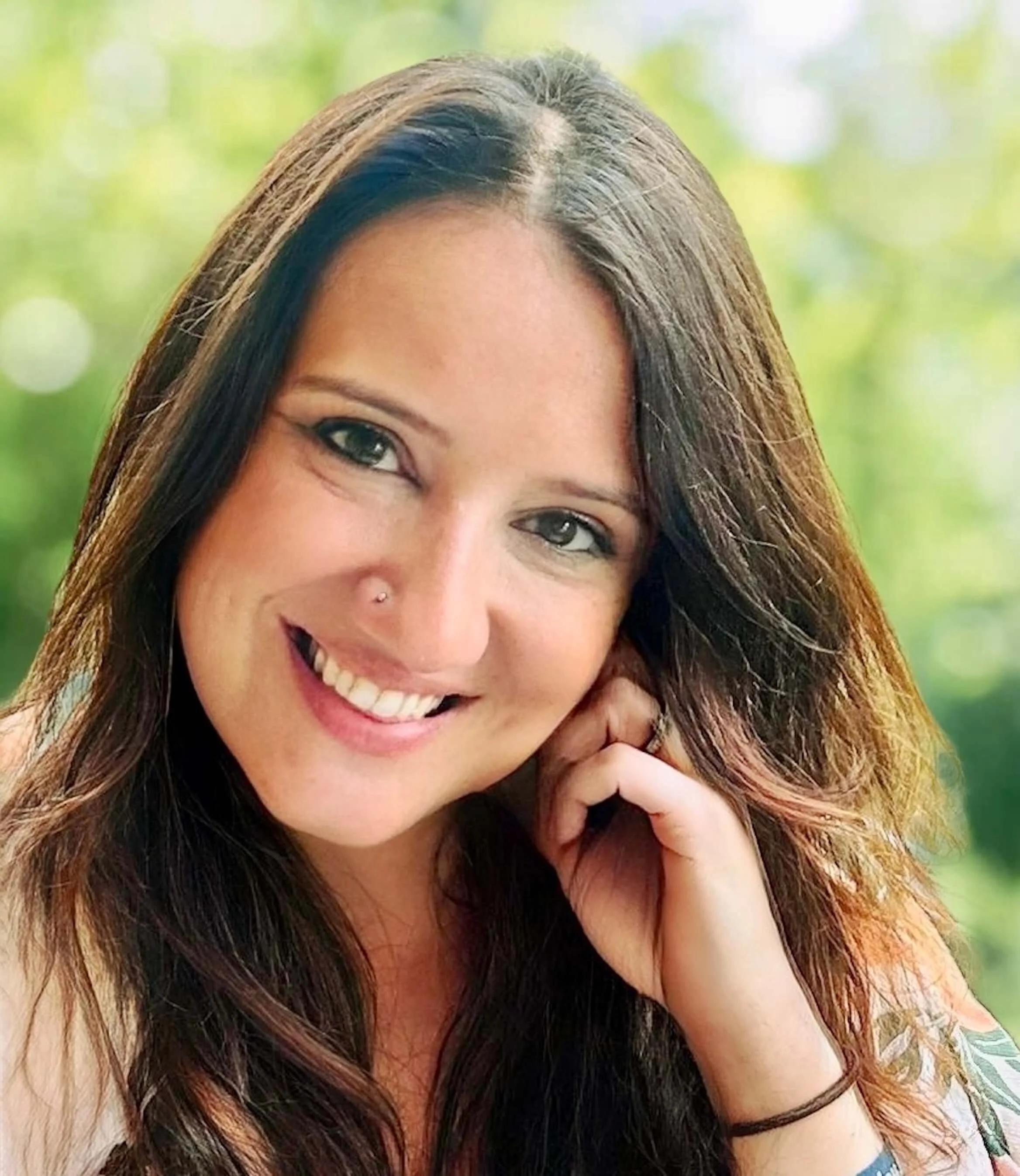
Nikki Allen
I had such a great response to my previous blog post, sharing an honest update as to where I’m with my own writing career, and how I’ve been enjoying having a break from publishing.
Honestly, I was inundnated with messages from authors who had been experiencing similar feelings to me, and it got me thinking a lot about author mental health, and how tricky it can be to navigate life as an author.
That’s why I’m delighted to have Nikki Allen as a guest today. Nikki is the author of two published novels, with her latest, Below The Deck, released this July. She is also a qualified therapist!
I asked her all the questions I’ve ever wanted answered on the topic of mental health and being an author… and her answers are truly through-provoking. Enjoy!
Hi Nikki! Thanks so much for being here.
One of the things I struggle the most with as an author is spending so much time alone. Even though I love being alone! From a therapist’s point of view, what kind of effect can this have on people - to spend so much of their working life alone?
Hi Charlotte and all your readers! Thanks so much for inviting me onto your blog to chat about all things authors and mental health. This is a cracking question to start with, although I think my answer might be a bit frustrating, because the honest answer is… it depends!
There’s some research to suggest working alone – especially if you also live alone – can make you more likely to experience depression and emotional burnout. There’s also a study that finds an interesting compound effect – that the more time you spend alone working from home, the more likely you are to also isolate socially, cancelling plans with friends and so on.
“... for some people, working alone actually has measurable psychological benefits: reduced stress, a calmer nervous system, and an increased ability to focus – all really helpful for authors!”
However, this isn’t the whole story. For example, there’s a strong age correlation here – the negative mental health impact is far greater for under 25s who work alone from home, but for over 55s, there’s very little negative impact at all. And for some people, working alone actually has measurable psychological benefits: reduced stress, a calmer nervous system, and an increased ability to focus – all really helpful for authors! So I think the key is just to be really mindful of your own personal needs, preferences and wellbeing.
The writing industry is incredibly tough and rejection is par for the course. As well as criticism and difficulty getting sales. Have you got any tips for authors to help them separate their self-worth from their writing successes?
I think this is honestly one of the hardest things to do, mainly because our creative work feels so personal (I’m sure I’ve literally described my books as my babies!). But we’ve often spent years putting all our imagination, emotion and identity into our book, and it can feel so painful when something we’ve poured our heart and soul into ends in rejection or ‘bad track’.
Something I think we can watch out for, though, is over-generalising or ‘globalising’ – the tendency to take one fact, event or feeling and turn it into our entire identity. For example, “that agent rejected me, so I must be a rubbish writer”, or “my book didn’t sell well, so I must be a failure.” This is a really normal cognitive process, but it’s not helpful for our feelings of self-worth!
To counter this, it’s important to first try and notice that thought pattern – literally just observe it, with compassion, no judgment, like “I’ve just made a really big negative statement about myself based on one experience,”. And then see if you can swap any of the sweeping, absolute statements for something that has a bit more space to it, like, “I’ve been rejected, and it hurts, but this experience doesn’t dictate my future as an author,” or even, “I’ve failed to get an agent, but that doesn’t make me a failure.”
I’d love to get your thoughts on social media and what impact this might have on authors’ mental health. Any advice on dealing with it?
There’s no doubt that social media can be a wonderful way to promote our work and connect with the writing/reader community.
On the flip side, it’s pretty much guaranteed to make most of us suffer from ‘comparisonitis’, that delightful phenomenon where we compare our internal state to other people’s external success (and inevitably find ourselves lacking!). We’re seeing everyone else’s announcements, while experiencing the entirety of our own career, including all the silence and disappointment that people post about a lot less.
I think it helps to treat social media like any other environment: you’re allowed to decide and set boundaries! Mute people temporarily, stay off Goodreads during a vulnerable period, don’t check Kindle rankings at midnight (or maybe that was just me!).

As a published author yourself, what have been your biggest challenges mental-health wise? Has anything particularly surprised you about the process of being published?
Like many therapists, I came into the therapy profession after years of my own personal therapy to treat anxiety and complex PTSD. So I was no stranger to mental health struggles before I started writing creatively, or encountered the publishing industry.
“I’ve found the emotional whiplash especially surprising.”
Since being published, I’ve had to work hard in my own personal therapy to stay mentally well, because there are so many things I’ve found challenging – the rejection, the readers who don’t adore every word I write (!), the uncertainty around sales and future contracts, the lack of control. And honestly, also, the weird feeling of apathy I got after I’d made a lifelong dream come true – it’s almost like, ‘ok, so now what?!’. I also think the publishing industry in general could do more to take authors’ mental health and wellbeing seriously, with a bit more support, check-ins, helping to manage our expectations, etc.
I’ve found the emotional whiplash especially surprising. Something amazing can happen, and then twenty minutes later, I’m worrying about sales or the next book. The goalposts move so fast, and I don’t think I was prepared for what a rollercoaster it can be!
One of the key things to help you cope with a career as an author is developing resilience. Do you have any advice on how authors can toughen up?
So, bit of a hot take here, but I don’t actually think we need to toughen up at all! (In fact, I run a workshop on resilience that’s literally called ‘Don’t just toughen up’!). In my opinion, there’s no such thing as being ‘over-sensitive’ – sensitivity is a gift and I’m not sure that without it, we’d be able to succeed as writers at all.
“So, bit of a hot take here, but I don’t actually think we need to toughen up at all!”
Instead, I think we need to redefine what resilience means. For me, resilience is less about not being affected and more about developing confidence that you can recover. A rejection can hurt without destroying you. A bad review can sting without becoming your identity. Rather than ‘toughening up’, I think we should turn our attention to ‘filling ourselves up’. How do we best resource ourselves to cope with the inevitable challenges that writing and publishing involves? What helps us with the difficult parts?
So instead of asking, How do I toughen up so this doesn’t hurt?, I’d ask, How do I look after myself when I care deeply and something hurts? This might be different for different people, but for me, it’s having a good support network, taking care of myself, taking breaks when I need it, allowing myself to feel and talk about the things I find tough rather than telling myself I should be ‘grateful’ all the time, having good boundaries around reviews/social media and reminding myself of everything I’ve survived to get here!
Control is another topic that fascinates me! I have this theory that most authors are Type A people, and one of the challenges is handing over a book to a publisher (and indeed, to the world) and ‘letting go’ when you are basically a control freak. Again, do you have any advice on managing this?
As an anxious control freak myself, I absolutely relate to this! But when it comes down to it, there’s very little in life that any of us can actually control – we can control our own actions, choices, thoughts (sometimes!), and behaviours – but that’s about it. We can’t control other people. We can’t control the publishing industry. We can’t control how other people feel or respond to our work.
So I think it’s helpful to divide things into three categories: what I can control, what I can influence, and what I have to release. I can control whether I write today. I might influence how I promote the book. But I can’t control reviews, sales, retailer decisions or whether somebody connects with it as a reader.
Overall, though, my experience is that – ironically – the more I acknowledge how little control I actually have, the happier and more peaceful I get!
Has your work as a therapist informed your own writing? If so, how?
Definitely – most significantly, in my character development. When I’m thinking about a character, I’m analysing their attachment style, imagining what they’d be like in the therapy chair, exploring their childhood traumas, all of it!
Being a therapist has also made me really interested in the gap between outward appearances, and inner experiences. There’s often a chasm between what people say, what they do and how they actually feel. That is incredibly useful in fiction, especially thrillers!
What’s the one thing you wish all authors knew about mental health?
It’s hard to choose just one, but probably that difficult feelings or finding publishing hard aren’t evidence that you shouldn’t be an author, or that you’re somehow doing anything wrong!
I think so many of us can be judgmental about our feelings – that we “shouldn’t” feel a certain way, or that some of our emotions are wrong. But all our feelings are valid, even the uncomfortable ones, and even if they don’t seem to make sense! For example, it’s possible to be grateful and disappointed; proud and jealous; excited and exhausted, all at the same time.
So, I’d love it if as authors, we could try not to create an extra layer of suffering by telling ourselves we shouldn’t feel a certain way, or we ‘should just be grateful’. Mental health tends to improve when we allow ourselves to be complex and a bit messy!
Finally, please explain where people can find out more about you and your writing and work as a therapist.
Of course! As we’ve mentioned, I’m an author and a qualified therapist; I also run wellbeing and communications training for organisations including the UN, the UK Government and all kinds of businesses. My thrillers The Hideaway and Below the Deck are published by Pan Macmillan and are available in all good bookshops!
You can connect with me on Instagram at @nikkiallen_author, and read more about my professional work on my website: nikkiallen.co.uk.
Save 10% off your first year’s Squarespace subscription using code CHARLOTTE10
